Why is the sky blue? A small question. A brilliant answer.
The everyday science behind blue skies and red sunsets.
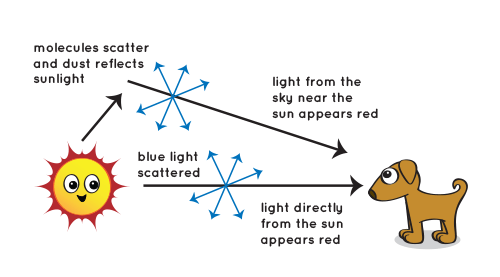
Air molecules scatter shorter blue wavelengths more strongly than longer red wavelengths. That scattered light reaches our eyes from across the sky.
White light has many colours
Sunlight looks white, but it contains a range of visible colours. Different colours have different wavelengths. When light meets the molecules in our atmosphere, some of it changes direction: this is scattering.
Why sunsets look different
At sunset, sunlight travels through more atmosphere before reaching you. More of the blue light is scattered away along that path, leaving warmer reds and yellows. The atmosphere changes what reaches your eyes.
Remember it for GK
Associate a blue daytime sky with scattering. A red sunset is another consequence of the longer path sunlight takes through the atmosphere. The ocean is not the reason the sky appears blue.
Image: NASA Space Place · Source · NASA educational image. Archival image; resized and compressed for delivery in a fitted frame.
Frequently asked questions
Why is the sky blue?
Air molecules scatter shorter blue wavelengths more strongly than longer red wavelengths. That scattered light reaches our eyes from across the sky.